
Welcome to Patriot Path
Nexus Letters for Tinnitus
Licensed Physician, MD | Patriot Path Medical Team
Specializing in VA auditory evaluations and independent medical opinions • Last updated: June 2026
Board-certified physicians specializing in VA disability documentation. Meet our clinicians → • Our review process →
A nexus letter for tinnitus is a physician's written opinion that ties your tinnitus to your military service at the VA's 'at least as likely as not' standard. Tinnitus is the most-claimed VA disability, yet claims are often denied when in-service noise exposure was never documented. A nexus letter supplies the missing medical link.
A nexus letter can fix that. Our physicians connect your tinnitus to your service in the language the VA expects, and they help you build the secondary claims that tinnitus often drives. One flat fee of $1,500, and the first consultation is free.

How VA Rates Tinnitus
The VA rates tinnitus at a flat 10% under 38 C.F.R. § 4.87, Diagnostic Code 6260. It is the same 10% whether you hear it in one ear, both ears, or in your head, and 10% is both the minimum and the maximum. To raise a combined rating, veterans claim the conditions tinnitus causes, such as migraines, depression or anxiety, as secondary.
| Rating | What it generally takes | Monthly pay (approx) |
|---|---|---|
| 0% | Not service-connected, or the ringing is not recurrent. No tinnitus rating is assigned. | $0 |
| 10% | Recurrent tinnitus that is service-connected (DC 6260). This is the single rating for tinnitus, whether you hear it in one ear, both ears, or in your head.Most Common | ~$180/mo |
There is no rating higher than 10% for tinnitus. A federal court upheld that limit, so do not expect 20% or 30% for the ringing itself. The way tinnitus raises your award is different: it is one of the strongest anchors for secondary claims. Migraines, depression, and anxiety are reported alongside constant ringing, and each has its own diagnostic code and can be service-connected as secondary to tinnitus (38 C.F.R. § 3.310) where the evidence connects them. Whether a grant raises your combined rating depends on the condition, on the same terms set out below. Insomnia is the exception: VA's adjudication manual directs raters to fold sleep symptoms into the primary disability rather than evaluate them separately, so an insomnia-secondary-to-tinnitus claim rarely adds a percentage on its own. Tinnitus is also normally rated separately from hearing loss, so the two combine.
Pay figures are approximate 2026 rates (effective December 1, 2025) for a single veteran with no dependents. Check VA.gov for current amounts.
Making a VA Disability Claim for Tinnitus
When you file a VA disability claim for tinnitus, three things need to line up:
A current diagnosis
Tinnitus is diagnosed mainly from what you report, since only you can hear it. A provider documents that it is recurrent.
A service connection
Noise exposure in service, especially gunfire, blasts, aircraft, or engine rooms, usually without consistent hearing protection.
A medical nexus
A qualified opinion that your tinnitus is 'at least as likely as not' connected to that noise exposure.
Tinnitus is not presumptive in the Agent Orange or PACT Act sense, so outside the narrow chronic-disease routes covered in the questions below, the VA will not simply take your word that it came from service. The nexus is where these claims are won or lost, especially when your hearing was never tested at separation. A nexus letter supplies it: a written medical opinion tying your tinnitus to your service. The 'at least as likely as not' standard (a 50% or better chance) comes from the benefit-of-the-doubt rule in 38 U.S.C. § 5107(b), carried out in 38 C.F.R. § 3.102.
How to Connect Your Tinnitus to Service
There are a few ways to tie tinnitus to your service. For most veterans the direct noise-exposure path is the one, even when the ringing did not get loud until years later.
Direct connection
Loud noise in service damaged your hearing and caused the ringing.
- Impulse and blast noise. Gunfire, artillery, breaching charges, and blasts are classic causes of ringing, and the damage can happen in an instant.
- Your job. The VA keeps a noise-exposure list by military job. Combat arms, artillery, and aviation roles carry a high probability of hazardous noise.
- Delayed onset. Tinnitus can start or get worse years after the exposure. That gap does not disqualify you, but it does make a nexus letter more important.
Secondary connection
Another service-connected condition, or its treatment, caused the tinnitus (38 C.F.R. § 3.310).
- Head injury or TBI. A blast or head injury in service can cause tinnitus along with headaches.
- Hearing loss. Tinnitus commonly occurs alongside service-connected hearing loss. Note that where an examiner calls the tinnitus a symptom of the hearing loss, VA's manual directs a direct-basis grant on conceded common etiology rather than a secondary one.
- Ear disease. Meniere's disease and some chronic ear conditions cause tinnitus.
- Ototoxic medication. Some drugs taken for a service-connected condition can damage hearing and cause ringing.
Aggravation
You had some ringing before service, and service made it permanently worse.
- Worsened by service. Mild ringing before service that loud duty turned into constant, daily tinnitus.
Secondary Conditions
This is where a tinnitus claim can earn its keep. Tinnitus itself caps at 10%, and the conditions it goes on to affect are not capped that way. Whether documenting a link raises your combined rating depends on the condition: it has to be separately diagnosed, service-connected as secondary, and rated at a compensable level, and some of them fold into the primary instead of paying anything.
Tinnitus may be secondary to
- Head injury or TBI. A blast or head injury can cause tinnitus and headaches together.
- Hearing loss. Tinnitus commonly occurs alongside service-connected hearing loss. Where an examiner calls the tinnitus a symptom of the hearing loss, VA's manual tells raters to grant it on a direct basis rather than a secondary one. See our guide to claiming tinnitus alongside service-connected hearing loss →
- Meniere's disease or ear conditions. Some chronic ear diseases cause ringing.
- Ototoxic medication. Drugs taken for a service-connected condition can damage hearing.
Conditions that may be secondary to tinnitus
- Migraines and headaches. Constant ringing is a well-recognized trigger for chronic headaches and migraines. See our nexus letter for migraines secondary to tinnitus →
- Insomnia and sleep problems. Ringing that will not stop makes it hard to fall asleep and stay asleep, though VA usually folds sleep symptoms into the primary disability rather than rating them separately. Why an insomnia secondary claim rarely pays, and what to claim instead →
- Depression. Living with a sound that never quits wears mood down over time. This is a common, and ratable, secondary claim. See our nexus letter for depression secondary to tinnitus →
- Anxiety. A sound the brain cannot switch off keeps the nervous system on alert, and the strain can develop into an anxiety disorder with its own diagnostic code. See our nexus letter for anxiety secondary to tinnitus →
What to Gather - Evidence Checklist
Gather these before you file or ask for a letter. Tick each off as you go.
Frequently Asked Questions
How much is tinnitus worth?
Tinnitus is rated at a flat 10% under Diagnostic Code 6260. For a single veteran in 2026 that is about $180 a month. There is no higher rating for tinnitus on its own.
Why can't I get more than 10% for tinnitus?
The rule allows only one 10% rating for recurrent tinnitus, whether you hear it in one ear, both ears, or in your head. A federal court upheld that limit. To raise your award, you claim the conditions tinnitus causes, such as migraines, depression, or anxiety, as secondary. Insomnia is the exception, because VA folds sleep symptoms into the primary disability rather than rating them separately.
Is tinnitus a presumptive condition?
In one narrow way, yes, though not the way most veterans mean. Tinnitus is treated as an organic disease of the nervous system, which makes it a chronic disease under 38 C.F.R. § 3.309(a). The regulation never names tinnitus itself; the Court placed it inside that category in Fountain v. McDonald, 27 Vet.App. 258 (2015), at a minimum where there is evidence of acoustic trauma, and VA's manual says the same at M21-1 V.iii.12.A.1.d. That opens the continuity-of-symptomatology route under 38 C.F.R. § 3.303(b), and a one-year presumption under 38 C.F.R. § 3.307 only if you served 90 days or more during a war period or after December 31, 1946 and the ringing was already at a compensable level within a year of separation. It is nothing like the Agent Orange or PACT Act presumptives, and outside those conditions you still show the connection is 'at least as likely as not', usually to noise exposure.
Can I get tinnitus and hearing loss at the same time?
Usually yes. Tinnitus (DC 6260) and hearing loss (DC 6100) carry separate evaluations that combine, and Note (1) to DC 6260 says so expressly. The narrow exception is where the tinnitus is already being counted inside a different ear code, such as Meniere's syndrome under DC 6205. Our guide to a nexus letter for tinnitus secondary to hearing loss works through the combined-rating arithmetic and explains why the theory you plead is not the obvious one.
My ringing did not start until after I got out. Does that hurt my claim?
Not by itself. Tinnitus can show up or get worse years after the noise exposure. The gap does make the medical link more important, which is exactly what a nexus letter provides.
What does it cost, and how do we start?
Patriot Path charges $1,500 flat for a nexus letter, and the first consultation is free. Book a consultation and a clinician will tell you straight whether a letter can help.
Guides for this condition
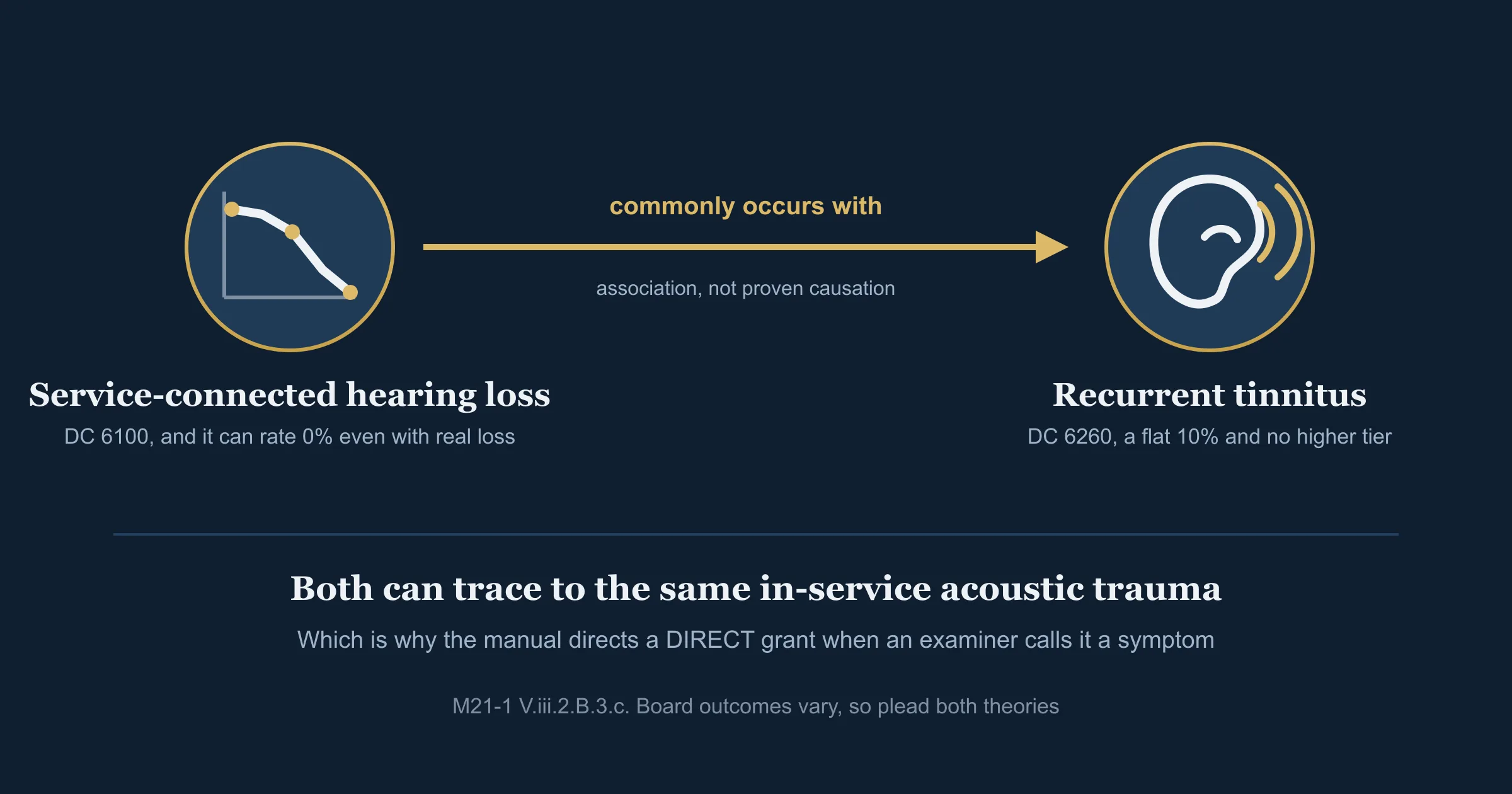 Nexus Letter for Tinnitus Secondary to Hearing LossVA's manual tells the rater to grant tinnitus directly, not as a 3.310 secondary claim. Why Board practice varies, what DC 6260 adds, and when you need no letter.Read the guide
  Nexus Letter for Anxiety Secondary to TinnitusAnxiety from service-connected tinnitus can be claimed as secondary. What the nexus letter must prove, the VA rating rules, and who the claim actually pays.Read the guide
 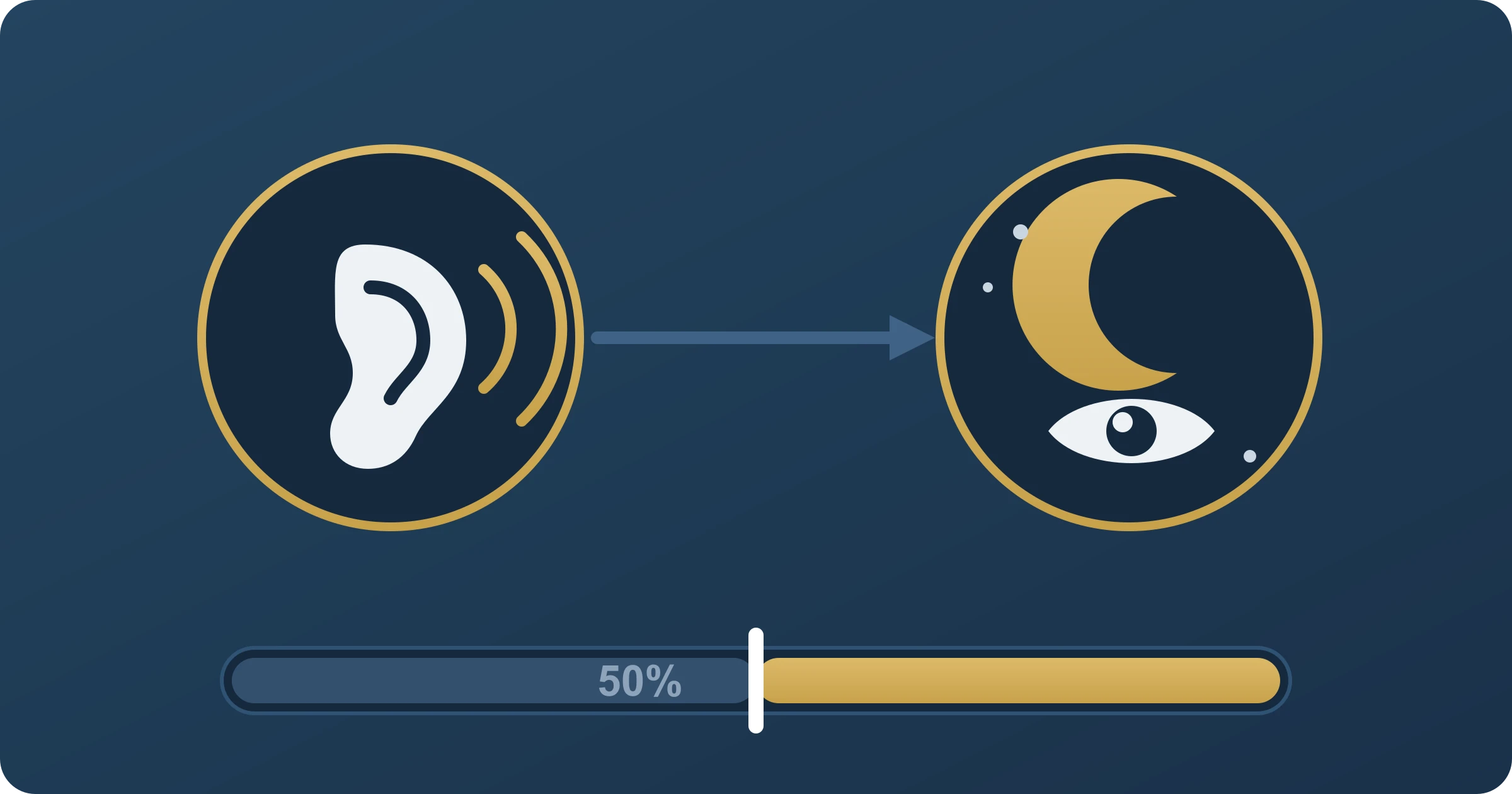 Insomnia Secondary to Tinnitus: The Nexus Letter GuideInsomnia secondary to tinnitus rarely pays on its own: VA folds the symptoms into your tinnitus rating. What M21-1 says, and what to claim instead.Read the guide
 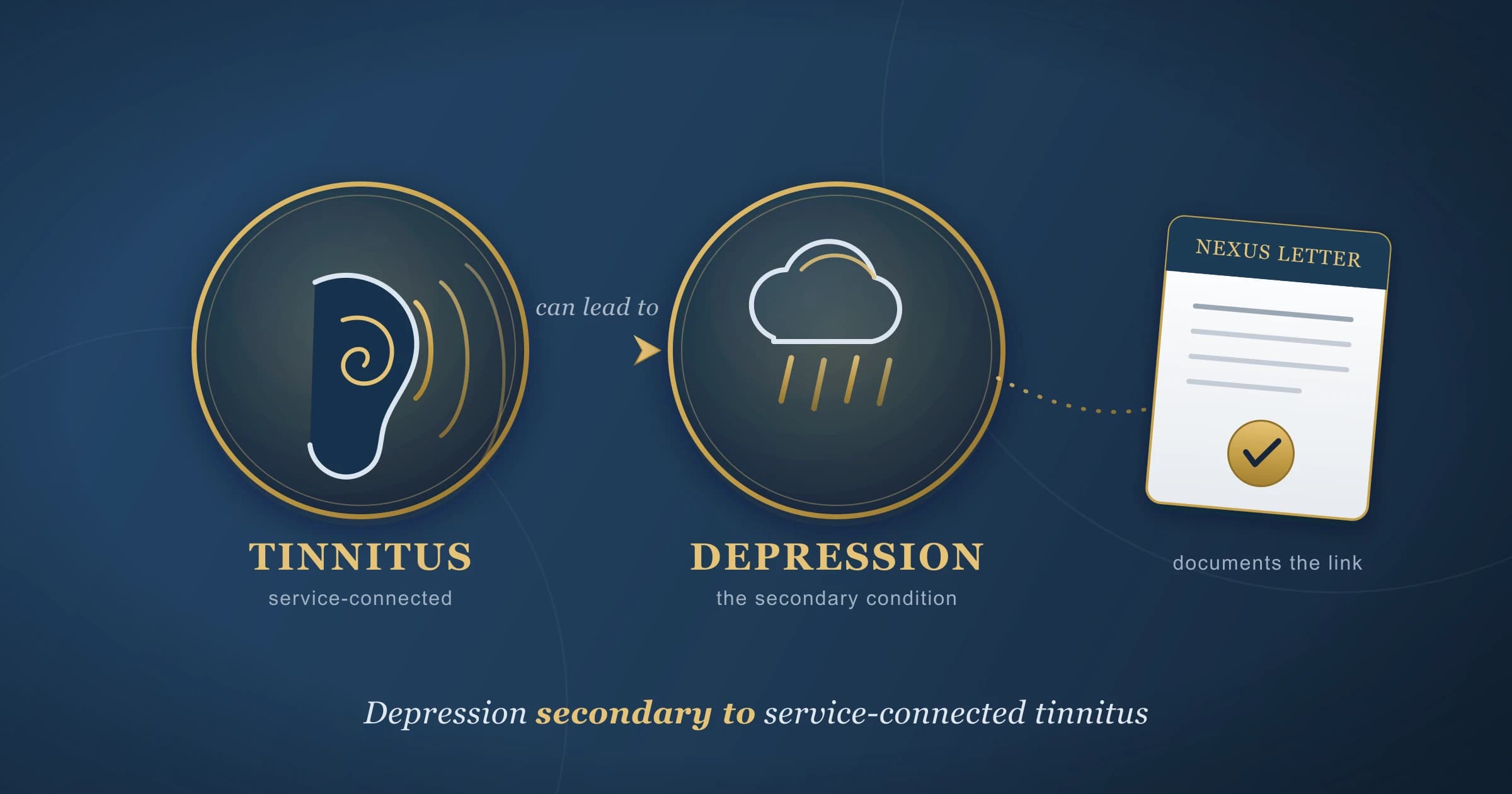 Nexus Letter for Depression Secondary to TinnitusDepression from service-connected tinnitus can be claimed as secondary. What the nexus letter must prove, the VA rating, and the language, from our physicians.Read the guide
 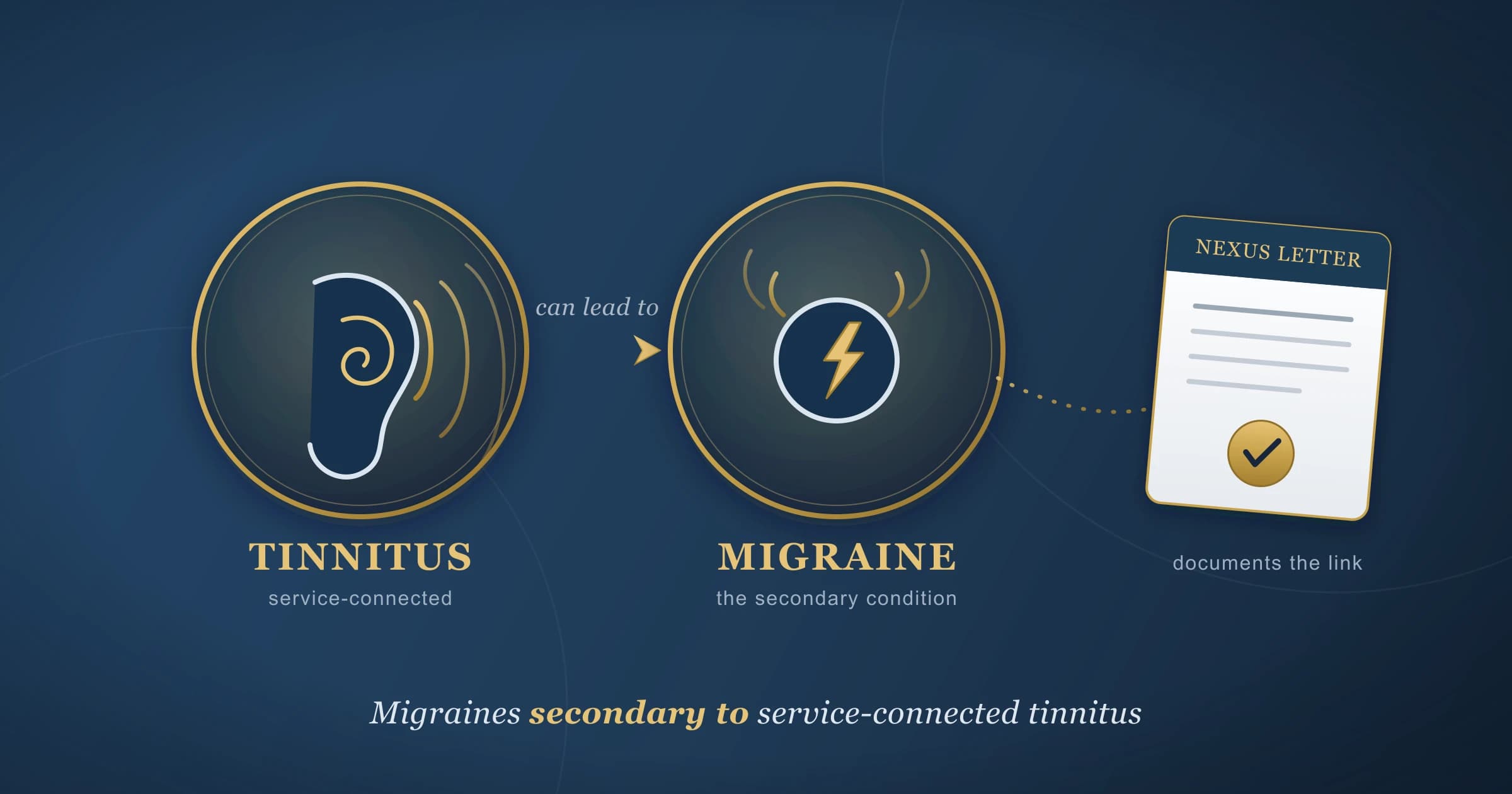 Nexus Letter for Migraines Secondary to TinnitusMigraines from service-connected tinnitus can be a secondary VA claim. What the nexus letter must prove, the DC 8100 rating, and the exact language.Read the guide
The ringing followed you home. Let your claim reflect it.
Let our physicians prepare a tinnitus nexus letter that meets the VA's evidence standards, and help you build the secondary claims it supports.
Sources & Regulatory References
- VA disability compensation (VA.gov) https://www.va.gov/disability/
- 38 CFR 4.87, Schedule of ratings, ear, including DC 6260 tinnitus (eCFR) https://www.ecfr.gov/current/title-38/section-4.87
- 38 CFR 3.303, Principles relating to service connection (eCFR) https://www.ecfr.gov/current/title-38/section-3.303
- 38 CFR 3.310, Secondary service connection (eCFR) https://www.ecfr.gov/current/title-38/section-3.310
- 38 U.S.C. 5107, Benefit of the doubt (Cornell LII) https://www.law.cornell.edu/uscode/text/38/5107